

Seabirds of the Isle of May

I've lived near enough to the Isle of May for 20 something years to be slightly ashamed of the fact that I've only visited three times. You'd think that an island with its reputation for rares and a brilliant seabird colony may have tempted me over before 2022 but for whatever reason, it just didn't happen. Such a waste of opportunity - but at least I can be glad that I've been a few times now.
The rare birds are exciting but from a sound recording point of view the seabirds provide a rare opportunity. The Island is covered in them and it's big enough that you can often encounter them in situations where you are not having to contend with the background noise of the sea. For some species this is not too much of an issue. Waders, for example, have calls that tend to be high in frequency, which means you can isolate some of the background lower frequency noise and gently edit it out. With many seabirds though, the calls are really broadband (i.e. cover a wide range of frequencies) or really low frequency, which makes editing out the background noise (which also tends to be low frequency) a lot tougher unless you have some fancy program like Spectral Layers. Anyway, this is just one of the many reasons I really love the place...
It's home to all the species you'd expect at a North Sea seabird colony. Auks, kittiwakes and fulmars on the cliffs, terns in the middle of the island, and gulls everywhere. Eider also nest, often in the oddest locations, including at the side of the main path that runs up the island from where the boats moor. Even when the tour boats visit the island and you have to stay on the footpaths, you can still find yourself at arms length from the birds. On a windless day, it's a sound recorders paradise.
So. Enough waffle, here are some noises.
First up, here's a recording of some guillemots. To be fair, it's really just a recording of a seabird colony with guillemots in the foreground, and I like it as I think it really captures the hustle and bustle and to and fro of life on the cliff. Near the beginning of the recording the mic has picked up the flapping of wings as a guillemot returns to the cliff, which gives a feel for the energy of the place.
Guillemot

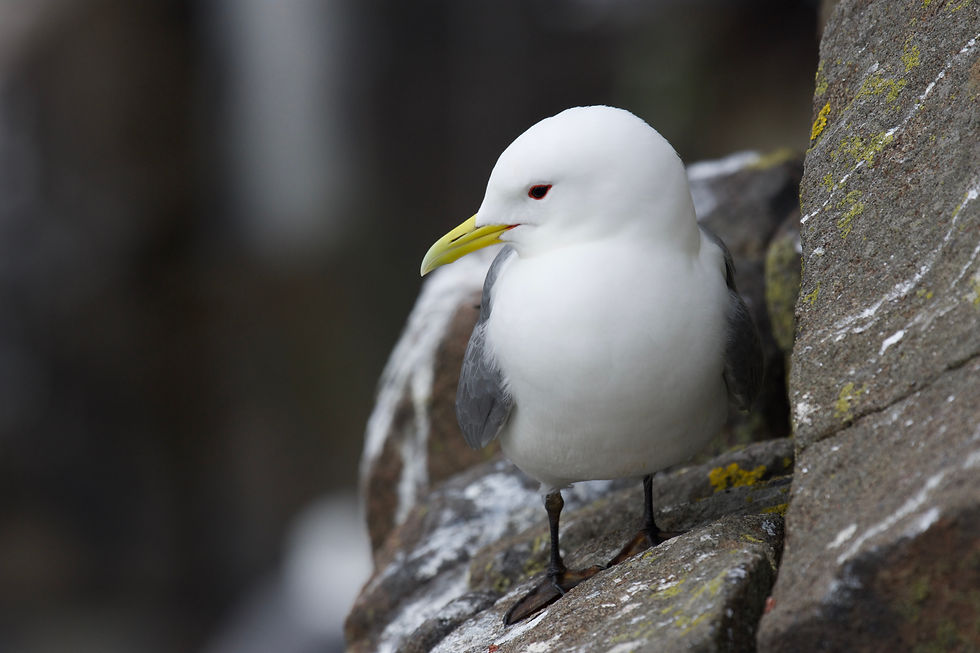
Next is kittiwake, probably the most iconic sound of the seabird colony, however this recording focusses on some different calls. While there is plenty of standard 'kittiwaaake' calling going on, there are also a few long sequences of a much simpler call that is quite reminiscent of some common gull calls (as a slight aside for nocmig fans, kitts have been known to give these calls in flight at night, so one to listen out for). There is a lovely, summery, ebb and flow to the recording, with waves of calling (perhaps from neighbours when a bird returns to a nest?) interspersed with calmer periods.
Kittiwake
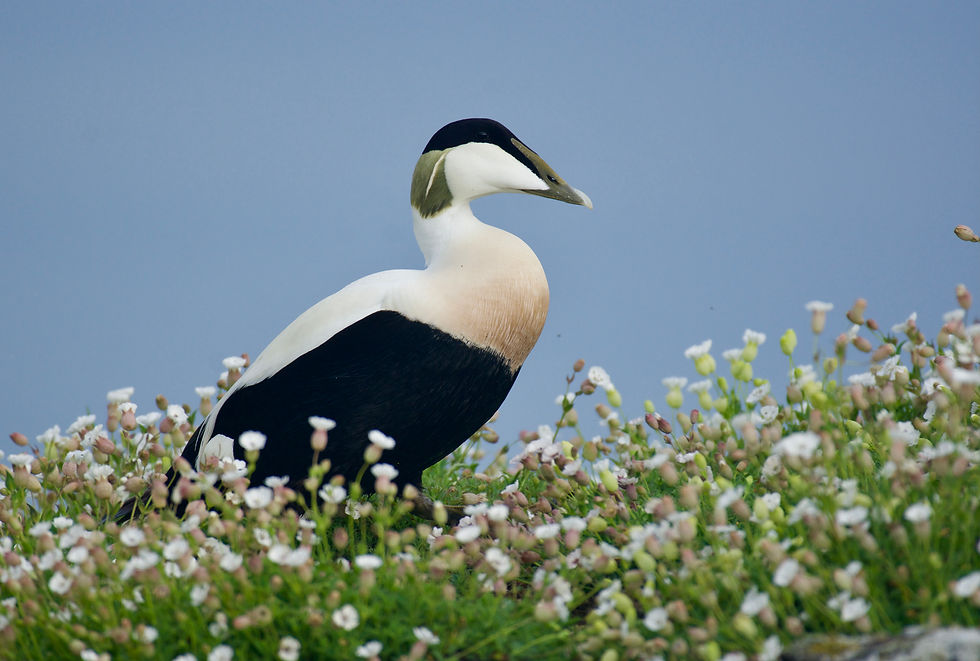
The next recording features common eider, loafing on 'the loch'. It's recorded from half way up 'heart attack brae', so called because, well, it's a bit steep! As such it's more of a soundscape really, with eiders grunting and 'ooOOOoooh'ing and a lively kittiwake colony clamouring for attention in the background. This was recorded in late May, by when the first eider chicks were beginning to creche on the loch. In the second eider recording we can hear a male grunting as he wandered round hopefully after a lone female. I'm really disappointed that there's so much mic popping in this, it sort of spoils the recording - but one thing I do love is that you can hear the rustle of the vegetation (around the 25 to 35 second mark) as the male plods forlornly after the female.
Eider
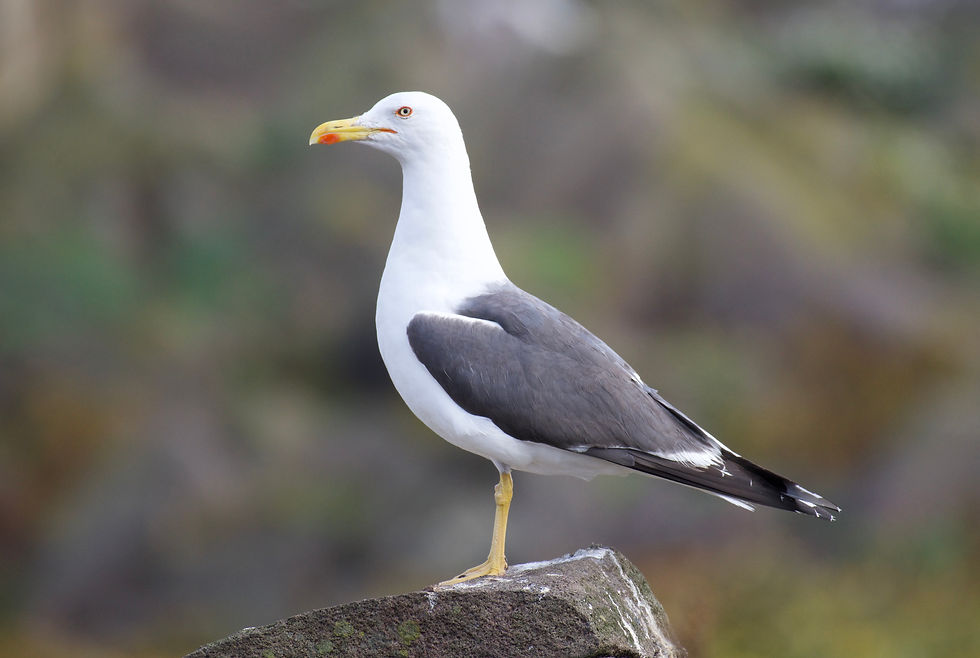
Gulls are everywhere on the island, and to be frank there is no excuse for not getting good recording of them! For me the island gives a great chance to record gulls other than herring gulls. There are common, LBBG and GBBG all breeding in Aberdeen among the thousands of herring gulls, but invariably there is traffic noise or you would have to hang around a car park or in someone's driveway swinging a parabola about, which is never a good look. So, to have lesser black-backed gulls as numerous as herrings and at point blank range was a joy.
Lesser black-backed gull
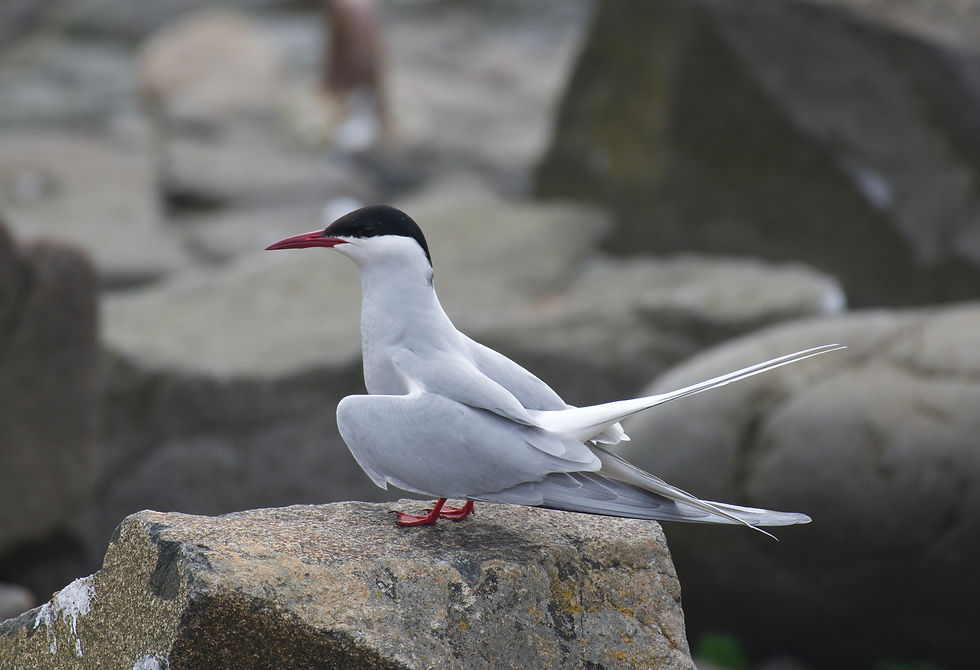
Last, but under no circumstances least, there are Arctic terns. These are a sound recorders dream. Noisy, with all manner of different calls, and all over the place. They have an aggression to their voices and personalities that is belied by their delicate shape and pastel shades. Even the courtship sound somewhere between bickering and a death threat. On the May, at the right time of year and once the breeders have settled their calls are ubiquitous and are the cherry on top of the seabird soundscape cake. Here's some selected recordings of them, taken around a time when the colony was just settling on the island. Territories were being drawn up, humans were being mobbed and mates were being courted.
Arctic tern


Comments